Introduction
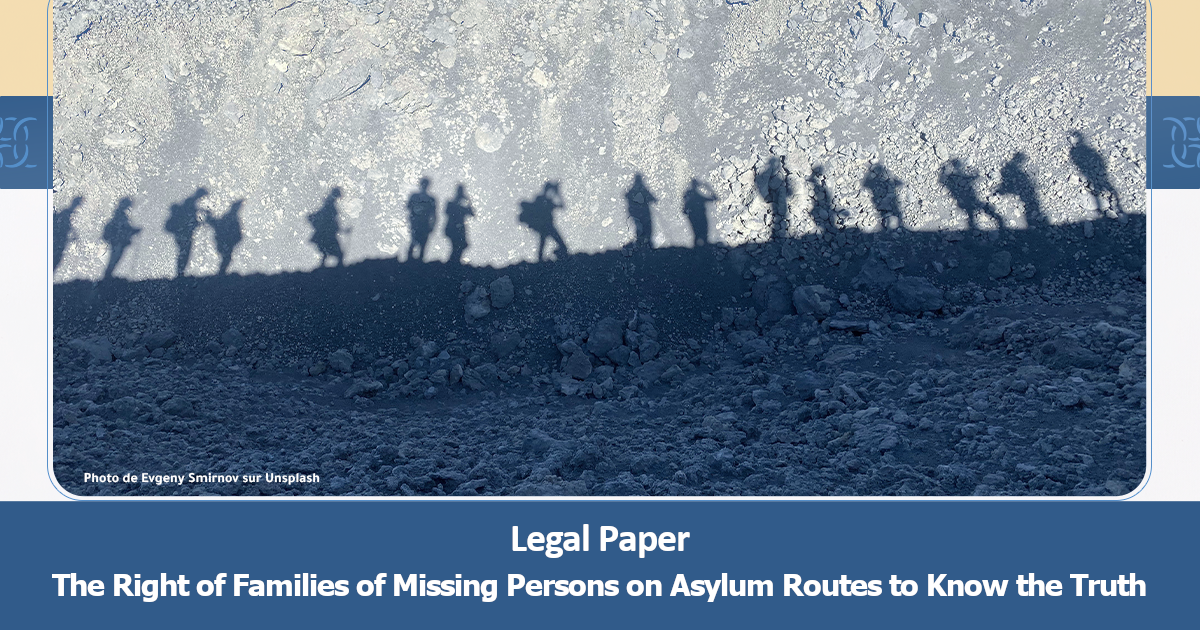
The crisis of missing migrants represents one of the most urgent humanitarian tragedies of our time. Thousands of people have gone missing while attempting to reach safety through migration routes, particularly those fleeing armed conflicts, persecution, poverty, and environmental disasters. According to estimates by the International Organization for Migration, more than 50,000 people have gone missing along migration routes worldwide since 2014, including over 28,000 in the Mediterranean Sea alone. These figures do not merely represent numbers; they reflect shattered lives and families condemned to a state of perpetual uncertainty. Despite the magnitude of this tragedy, the fate of the majority of missing migrants remains unknown, and their families continue to wait—often for years—for any news or evidence that might dispel the darkness of the unknown and put an end to the torment of waiting.
The Mediterranean Sea is considered the most dangerous migration route in the world. Since 2014, it has witnessed the deaths and disappearances of tens of thousands of migrants and asylum seekers, turning it into a vast, open grave. For families, the tragedy does not end with the sinking of a boat or the loss of contact; rather, a prolonged and painful suffering begins, marked by the absence of information, the lack of official recognition, and the failure of states to assume responsibility. Mothers, fathers, spouses, and children remain suspended between hope and despair, unable to mourn, unable to move on, and unable to access their most basic rights, while they await a piece of news or proof that might illuminate the fate of their loved ones and bring closure to an unending ordeal.
Impact of Enforced Disappearance on Families of the Missing
The suffering of victims’ families does not end with the sinking of a boat or the loss of contact; rather, it marks the beginning of a long and bitter phase of suffering for the families of the missing. Families live in a state of chronic uncertainty, described in psychology as “ambiguous loss,” in which the family does not know whether it should mourn the missing person or continue waiting for their return. This situation causes severe psychological pain that extends over many years: persistent anxiety and trauma, nightmares and insomnia, feelings of guilt stemming from the inability to know the fate of their sons, daughters, and family members or to save them, and a hope that is repeatedly rekindled and extinguished over time in the absence of any definitive news. Studies have shown that family members of the missing are at heightened risk of mental health conditions such as depression and post-traumatic stress disorder (PTSD), as a result of remaining trapped in a cycle of doubt and being unable to obtain final answers. Human rights experts have considered that the prolonged psychological suffering imposed by this state of waiting -combined with the failure of authorities to reveal the truth- may amount to cruel or inhuman treatment of families, particularly where there is evidence of officials’ involvement in withholding information or deliberate negligence.
In addition to psychological pain, the disappearance of a family member produces serious social and legal consequences. Families frequently find themselves in legal limbo due to the absence of a death certificate or official proof regarding the fate of the missing person. For example, the wife of a missing person may be deprived of her rights to inheritance or child support and may be legally unable to rebuild her life (such as remarrying) unless a court issues a ruling declaring her husband deceased in absentia. Similarly, children may face difficulties in establishing legal parentage or accessing entitled social assistance. In cases where the missing person was the primary breadwinner, families also suffer economic hardship as a result of the loss of income. The Commissioner for Human Rights of the Council of Europe has noted that the absence of a death certificate for parents can even hinder the swift family reunification of orphaned children with relatives. In addition, families face practical difficulties in searching for the missing: many exhaust their savings communicating across multiple countries with smugglers or witnesses in an attempt to obtain any information about the fate of their loved ones. When the family itself is composed of refugees or migrants, these obstacles multiply, as they encounter language barriers and bureaucratic obstacles in the countries where they search, and may fear approaching authorities due to their irregular legal status or the risk of deportation. This combination of psychological pain, social dislocation, and legal pressure renders the right to know the truth an urgent and vital necessity for these families. It is the only means of breaking the cycle of uncertainty, enabling a degree of psychological closure, and allowing families to move forward in adapting to a new reality, however painful. Knowing the truth- even if it is the death of the missing person- is better for families than living indefinitely in the shadow of the unknown.
The Right to Know the Truth
The United Nations has affirmed that the right to know the truth for victims of gross violations and their families is an independent and fundamental right that is non-derogable. The United Nations High Commissioner for Human Rights has concluded that the right to know the truth constitutes an integral part of the effective enjoyment of other fundamental rights and may not be restricted, even in states of emergency. For families of the missing, access to the truth is considered a basic condition for moral recovery and for achieving a form of closure to an open wound. Conversely, the prolonged deprivation of any information regarding the fate of their loved ones, and the maintenance of families in a state of waiting and psychological torment, may amount to inhuman treatment under international human rights law—particularly where the disappearance results from the failure or complicity of the relevant authorities in providing information or conducting investigations.
Accordingly, the right to know the truth is not merely a moral demand made by victims’ relatives; rather, it is an inherent legal right whose content is grounded in the rules of international humanitarian law and international human rights law, and which forms part of the victims’ and their families’ right to remedy and justice. International humanitarian law implicitly recognizes this right by obliging parties to conflicts to search for the missing and to inform their families of any available information. Article 32 of Additional Protocol I to the Geneva Conventions of 1977 provides that “the right of families to know the fate of their relatives” must be respected. Although the migration context differs from that of traditional armed conflict, the spirit of this humanitarian rule applies wherever comparable human suffering arises from the disappearance of persons. The United Nations Committee on Enforced Disappearances (CED) has affirmed that States must guarantee every family’s right to know the fate of their missing relatives and take the necessary steps in this regard—including the establishment of DNA databases, the collection of information on unidentified bodies, their identities and possible burial sites, and enabling families to access such information. Notably, the United Nations Working Group on Enforced or Involuntary Disappearances has indicated, in the context of migration, that systematic failure to comply with duties of search and disclosure—including cases of widespread pushbacks carried out by certain States’ authorities—may amount to enforced disappearance in the legal sense, where State involvement and failure to fulfil obligations are established.
Obligations of International Law and Principles of Responsibility
International laws and instruments impose clear responsibilities on States with regard to cases of missing migrants and victims of irregular migration. The most salient of these obligations and principles may be summarized as follows:
First: The duty to protect the right to life. States bear a fundamental responsibility to protect the lives of all individuals within their legal jurisdiction, without discrimination—including migrants and asylum seekers present on their territory or within their effective control. This requires governments to take proactive measures to prevent avoidable deaths during migration. The European Court of Human Rights has clarified that Article 2 of the European Convention on Human Rights (the right to life) imposes a positive obligation on States to protect the life of everyone within their jurisdiction. In the migration context, this means that States should provide safe and lawful pathways to access asylum procedures, refrain from extreme deterrence policies that force people into dangerous routes, and ensure the availability of effective search and rescue operations on land and at sea to respond promptly to migrants in distress. These obligations also include refraining from any deliberate acts that endanger migrants’ lives, such as pushbacks or ignoring distress calls—practices that are prohibited under international maritime law and may constitute serious violations of the right to life.
Second: The duty to investigate deaths and disappearances. When a disappearance or death of a migrant occurs under unclear circumstances or as a result of violent acts (such as drowning caused by collision or gunfire at borders), the concerned State must conduct an effective and thorough investigation to uncover the circumstances of what occurred. This includes collecting available evidence and information (such as boat wreckage, victims’ belongings, and communication records), hearing the testimonies of survivors and witnesses, and cooperating across borders where incidents span more than one jurisdiction. It also entails efforts to identify victims through forensic and medico-legal examinations. International principles emphasize that investigations into disappearances must be prompt, effective, and independent, with the involvement of families of the missing and the guarantee that they are informed of developments without delay. Failure to conduct serious investigations into migrant deaths or disappearances may itself constitute a violation of the State’s legal obligations and sends a negative message that migrants’ lives are valued less than others—contrary to the principle of the universality of human rights.
Third: The right of families of the missing to know the truth and the State’s obligation to realize it. As noted above, the right to know the truth has increasingly been recognized as an inalienable legal right. In cases of enforced disappearance in the context of human rights violations, this right is considered a State obligation linked to victims’ rights to justice and reparation. In the context of missing migrants, this right also applies—particularly where State actions or policies contribute to the disappearance or increase the opacity surrounding it. For example, authorities’ failure to conduct adequate rescue operations despite having the capacity to do so, the implementation of unlawful pushbacks that forcibly return migrants, or poor border management leading to fatal incidents without documentation—all constitute failures that may engage State responsibility for the disappearance of persons. The United Nations has recognized the right to truth as an independent right that may not be restricted and has affirmed that States are obliged to take effective steps to realize it. These steps include—as highlighted by the Committee on Enforced Disappearances—the establishment of national DNA databases and their linkage to international platforms, the creation of information banks on unidentified bodies and burial sites, and ensuring families’ access to such information to assist in identifying their loved ones. The State’s obligation to disclose the truth to families of the missing extends its duty to provide an effective remedy to victims and their relatives (as stipulated in Article 2(3) of the International Covenant on Civil and Political Rights), including the right to receive information regarding the outcomes of investigations and the circumstances of the incident.
Fourth: Obligations under international humanitarian law. In addition to the above, international humanitarian law imposes explicit obligations—within the context of armed conflicts—regarding the search for missing persons and the provision of information to their families. Article 32 of Additional Protocol I (1977) requires parties to a conflict to work to ascertain the fate of missing persons and to inform their relatives. Although missing migrants do not usually fall within the framework of armed conflict, the core values of humanitarian law—particularly respect for human dignity and families’ right to know the fate of their loved ones—apply in situations of humanitarian catastrophe such as the crisis of missing persons along migration routes. From a humanitarian perspective, it is unacceptable that thousands of families remain unable to know what happened to their children simply because the loss occurred outside the context of a traditional armed conflict.
Fifth: International accountability for patterns of violations. Systematic policies or practices that result in deaths and disappearances among migrants may engage international responsibility and require accountability. For example, where a pattern of unlawful pushbacks at a State’s borders is established and contributes to migrants’ disappearance or death without identification, this may constitute a violation of the State’s obligations under human rights law. Such conduct may even fall within the definition of enforced disappearance if its constituent elements are met, particularly where official authorities are complicit or deliberately refrain from providing information. In the European context, the Council of Europe has stressed that those responsible for such violations must not enjoy impunity—whether unscrupulous smugglers or official actors whose actions or omissions contributed to the loss of life. It is worth noting that collective expulsions have been judicially ruled unlawful because they expose migrants to the risk of disappearance and death, and the international community has called for their immediate cessation. Ending the culture of impunity in this area and holding perpetrators accountable will send a clear message that migrants’ lives are neither cheap nor expendable.
Existing Efforts and Gaps in the Response
Despite the gravity of the crisis of missing migrants, the international response remains insufficient, fragmented, and far below the scale of the tragedy. Nevertheless, recent years have witnessed some positive initiatives and growing attention, including, for example:
At the United Nations level, the issue has been strongly placed on the agenda of the Special Procedures of the Human Rights Council. In 2023, more than 200 international civil society organizations launched a joint appeal addressed to the Human Rights Council, calling for the establishment of an independent international mechanism to monitor violations at borders and enhance accountability in cases of migrant deaths and disappearances. This pressure resulted in an unprecedented discussion within the Council on the suffering of families of missing migrants and their right to know the truth. Although no new mechanism has yet been established, the mere presentation of this proposal at this level constitutes significant progress in breaking the wall of neglect surrounding the issue.
At the European regional level, the Council of Europe adopted a qualitative step in 2024 through the adoption of Resolution No. 2569 (2024) by the Parliamentary Assembly of the Council of Europe on missing migrants. The resolution recommended a set of concrete measures, most notably facilitating the issuance of necessary documents for families of the missing (such as certificates of disappearance or legal certificates of absence) to enable them to exercise their rights to inheritance and other rights, and to proceed with family reunification or resettlement procedures where applicable. The resolution also called on member States to appoint national focal points for missing migrants to serve as designated contact entities for inquiries and cross-border coordination regarding cases of disappearance, with these focal points exchanging expertise within a network overseen by the Council’s Special Representative on Migration and Refugees. This aims to enhance the speed of information exchange and cooperation between States when incidents of drowning or disappearance of migrants occur. These steps—although European in scope—represent a model that can be built upon globally to improve governmental responses to the issue of missing persons.
In the field of data and documentation, the Missing Migrants Project of the International Organization for Migration (IOM) constitutes a key tool for monitoring and documenting incidents of death and disappearance during migration. Since its establishment in 2014, the project has documented approximately 56,000 cases of migrant deaths/disappearances worldwide up to 2023, shedding light on hotspots where tragedies are concentrated (foremost among them the Mediterranean). However, the role of this project is limited to the collection of statistical data and does not extend to field search operations or criminal investigations into the fate of missing persons as individuals. It also does not include all cases of disappearance, meaning that while it provides an important general picture, it does not answer families’ questions about the specific whereabouts of their missing loved ones.
The International Committee of the Red Cross (ICRC) and the Red Cross and Red Crescent Movement also play an important role through the Restoring Family Links programme. Red Cross offices receive reports from families about their missing relatives and attempt to trace them through international humanitarian networks. They also provide some psychological and social support to families to help them cope with their ordeal. However, these humanitarian search efforts face numerous obstacles, most notably the lack of official information—government authorities often refrain from sharing data for political or bureaucratic reasons—as well as weak cross-border governmental cooperation in many complex cases involving multiple countries. This undermines the effectiveness of the programme in fulfilling families’ right to know the fate of their loved ones.
Some States have taken limited national initiatives. For example, Italy established a special commission to identify the bodies of migrants who drowned off the coast of Lampedusa in the 2013 disaster, using DNA analysis to match victims with samples from their relatives. Spain also established a DNA bank dedicated to relatives of missing migrants in the Canary Islands to facilitate the identification of remains found there. Although these initiatives remain limited in geographic and logistical scope, they represent steps in the right direction and confirm that techniques such as genetic analysis can succeed in determining the fate of missing persons even after many years.
Despite these efforts, major gaps continue to impede the achievement of a comprehensive and genuine solution to this humanitarian tragedy:
Absence of a specialized central international mechanism: Unlike situations of armed conflict—where mechanisms such as the International Commission on Missing Persons (ICMP) were established after the Balkan wars, or the Kosovo Missing Persons mechanism under ICRC supervision, and more recently the Independent Institution on Missing Persons in Syria (IIMP) established by the United Nations in 2023—there is still no international entity dedicated exclusively to missing migrants and to coordinating efforts among States in this field. The proposal to establish an international mechanism to search for missing persons along migration routes has been under discussion for some time but has not yet been translated into practical reality. This institutional vacuum leads to fragmented initiatives and the absence of a clear reference point to which families can turn for assistance in cross-border searches.
Weak cross-border coordination: Most cases of migrant disappearance occur in border areas (such as buffer zones between States), in international waters outside the jurisdiction of any single State, or during long journeys passing through multiple countries. This necessarily requires transnational cooperation among all concerned States—of origin, transit, and destination—to piece together the full picture. Currently, there is a clear deficiency in information-sharing and coordination among the authorities of these countries. Often, one State is unaware that its nationals are among the victims of an incident that occurred in another State, or data-sharing procedures falter due to the absence of a formal and secure cooperation framework. Experts in forensic medicine and disaster management have pointed out that international coordination is among the greatest challenges hindering the identification of migrant victims, given the multiplicity of jurisdictions and the difficulty of tracing missing persons across different systems. Even within a single State, fragmentation of competencies among multiple regions or provinces can complicate identification efforts if no central mechanism exists to unify information.
Lack of legal and procedural frameworks at the national level: Many States lack clear laws or protocols for dealing with cases involving unidentified migrant bodies or migrants missing during migration. For example, national legislation may not oblige forensic authorities to conduct thorough investigations when an unidentified migrant body is found on a shoreline; in some places, burial occurs quickly without analysis or attempts at identification. Several States also lack routine procedures for collecting DNA samples from unidentified bodies or from relatives of missing persons, thereby squandering the opportunity for later identification should new evidence emerge. The European Commissioner for Human Rights has noted that this legislative vacuum and lack of resources have sometimes left the task of identifying victims of maritime incidents to individual efforts, whereas in cases of air crashes or natural disasters, specialized teams and organized international coordination are deployed. This disparate treatment highlights the urgent need to close legal gaps and establish unified standards that take into account the specific context of migration.
Lack of technical and financial resources: Efforts in this field suffer from severe shortages of funding and technical equipment. Searching for missing boats, recovering bodies from deep waters, or conducting DNA tests and cross-border data comparisons all require substantial financial resources and advanced expertise. At present, most of this work relies on voluntary initiatives or limited budgets provided by some States and international organizations, which is entirely disproportionate to the scale of the global problem. The absence of sustainable funding hampers even existing good initiatives and limits their expansion, while discouraging potential new projects due to the lack of support resources.
Politicization of the issue and lack of political will: It cannot be overlooked that the issue of missing migrants has fallen victim to political polarization surrounding irregular migration. Rather than being viewed through a purely humanitarian lens as a matter concerning human lives and the suffering of their families, governmental responses are often influenced by domestic political considerations related to “migration deterrence” and avoiding appearing lenient. Consequently, some States may hesitate to highlight the high number of deaths at their borders to avoid media pressure or demands for compensation and accountability, or out of fear that this might encourage more migrants to come, believing that search and rescue efforts will be undertaken. Experts have pointed out that some governments fear that families’ knowledge of the truth could lead to legal claims against State authorities and demands for compensation for negligence or abuse. Official acknowledgment of large numbers of missing persons may also be considered politically embarrassing and provoke criticism of existing policies. As a result, this issue has largely remained in the shadows, and collective political will to take serious action has been absent despite the ongoing tragedy.
As a result, despite the aforementioned positive steps, the right to know the truth for families of missing persons along migration routes remains far from being fully realized to this day. There is an urgent need for international political will that transcends narrow calculations and adopts a shared humanitarian approach to a tragedy that knows no borders. The international community must act to close existing gaps and place the issue of missing migrants at the forefront of humanitarian priorities, in fidelity to human dignity and the universal rights enshrined in the Charter of the United Nations. In the following section, we present specific practical recommendations to advance this approach.
Recommendations
Based on the foregoing facts and legal provisions, this paper presents a set of practical recommendations that we hope will be adopted by the Human Rights Council, Member States, and the international community to support the right of families of the missing to know the truth and to take tangible steps in this direction:
- Strengthening international cooperation through the activation of existing institutions:
We call for enhanced activation of cooperation and coordination among existing international institutions already engaged with the issue of missing persons. For example, the International Commission on Missing Persons (ICMP) possesses advanced technical expertise in managing genetic databases and identification at the international level—acquired through its work in the Balkans and elsewhere—and could play a pivotal role in addressing missing migrants along migration routes. The International Committee of the Red Cross (ICRC) also has mechanisms for information exchange through the Restoring Family Links network. The same applies to the International Organization for Migration (Missing Migrants Project) and to specialized civil society organizations such as the Argentine Forensic Anthropology Team (EAAF), which has collected thousands of DNA samples from families of missing migrants in Latin America and contributed to identifying hundreds of them. We also specifically note the Syrian National Authority for Missing Persons, established in 2025 as a national effort with international support, which swiftly signed a memorandum of understanding with ICMP aimed at building a sustainable and comprehensive mechanism to search for missing persons and clarify their fate in Syria, with a focus on developing the capacities of local experts in criminal investigations, forensic medicine, genetic analysis, and database management. This fruitful cooperation between a national civil authority and international expertise represents a model to be emulated for integrating local and international efforts in addressing the issue of missing persons. Accordingly, the paper recommends that the Human Rights Council call for the establishment of an international coordinating task force under the auspices of the United Nations, comprising representatives of the aforementioned entities (ICMP, ICRC, IOM, IIMP, EAAF, among others), as well as advisors from families and their associations. This task force would organize efforts, distribute roles, and facilitate the exchange of information and resources to ensure the absence of gaps or duplication. The task force should focus exclusively on the global crisis of missing migrants, serving as a global network linking national search and identification bodies with international platforms and establishing unified cross-border procedural standards.
- Establishing and developing a unified international database linked to national databases, with a focus on DNA:
There is a need to adopt a project for a central database on missing migrants and victims of migration, overseen by a neutral international body such as ICMP or the Office of the High Commissioner for Human Rights. This database should include all available information from States and organizations: data on reported missing migrants (names, descriptions, photographs, fingerprints if available, DNA samples from relatives) and data on unidentified bodies recovered (forensic descriptions, distinguishing features, fingerprints, post-mortem DNA samples). Linking these data globally would enable rapid matching through computational technologies, potentially resolving thousands of unresolved cases and identifying many missing persons. We emphasize the role of DNA testing in identification processes: experience has shown that comparative genetic analysis is the most reliable method, particularly when bodies are decomposed or disfigured. Accordingly, national DNA banks should be established in destination and transit States to collect samples from survivors and relatives of the missing, securely linked to the international database. States should also be required to collect DNA samples from survivors of shipwrecks immediately upon reaching safety, following informed consent (especially survivors of incidents in which others went missing), for two purposes: first, to compare them with samples from families who reported missing relatives (in case some survivors were themselves reported missing by families unaware of their survival); and second, to use them as references for identifying other victims (for example, when one family member survives and another drowns, the survivor’s DNA can help identify the drowned relative’s body). Linking national databases regionally and internationally—with strict safeguards for privacy and personal data protection—would constitute a major breakthrough in efforts to clarify fate, fulfilling the call long made by the International Red Cross and Red Crescent Movement for a global system to register missing migrants. In this context, existing tools such as Interpol’s databases on missing persons and unidentified bodies can be utilized by feeding them with new information and ensuring access for relevant authorities in each State.
- Improving cross-border cooperation in search and investigation operations:
The threads of a missing migrant’s case are often spread across several countries—the country of origin where the family initiates the search, the transit country where the incident may have occurred, and the destination country that may hold some information or remains. Progress can therefore only be achieved through bilateral and regional cooperation agreements that remove bureaucratic obstacles to information exchange and joint investigations. The paper recommends that concerned States, particularly in the Mediterranean and Europe, initiate specific agreements for cooperation in boat sinkings and border death cases. These agreements should provide for rapid information-sharing mechanisms (such as the secure exchange of fingerprints, biometric data, and forensic reports) and for the possibility of forming joint investigation teams in major incidents affecting more than one State. Countries of origin (from which migrant victims originate, such as Arab and African States) should also be involved by appointing focal points in embassies and consulates to facilitate information transmission to families and coordination in the transfer of bodies or samples. Particular emphasis is placed on the responsibility of coastal States at points of departure—such as Libya, Tunisia, Algeria, Morocco, Türkiye, and Greece—which must be legally and ethically bound to intensify search and rescue efforts in their territorial waters and designated search and rescue (SAR) zones, and to exert every effort to identify those who perish on their shores. These States have, de facto, become the first line of confrontation in the Mediterranean tragedy and must cooperate transparently with destination States and international organizations in documenting shipwrecks and local burials. They must also cease any dangerous or hostile practices toward migrant boats—such as deliberately ramming boats or forcibly pushing them back—since such acts violate international maritime law and the right to life and have caused preventable deaths. We call on the Human Rights Council to appoint a Special Coordinator on Missing Migrants to facilitate international communication, urge States to cooperate, and monitor the implementation of relevant cross-border agreements and protocols.
- Making investigation and accountability mandatory and ensuring no impunity for perpetrators:
States must align their national legislation to mandate the immediate and comprehensive investigation of any migrant death or disappearance within their jurisdiction, just as any death of a citizen within the country would be treated. The law should clearly stipulate the responsibility of competent authorities (naval forces, border guards, police, forensic services) to collect and examine evidence in such incidents—including boat debris, victims’ phones and belongings, and survivor testimonies—in addition to conducting autopsies and DNA testing and comparing results with missing persons data. Authorities should also prepare public reports announcing investigation findings and causes of incidents, as transparency is an integral part of the right of society and victims’ families to know the truth. Legal frameworks must include the possibility of holding accountable any entity proven to have contributed to the death or disappearance, whether unscrupulous smuggling networks whose negligence or criminal acts caused the disaster, or State agents who acted unlawfully (such as coast guard personnel who used violence against migrant boats or officials who deliberately ignored distress calls). Ending the culture of impunity in this context requires criminalizing acts that deliberately endanger migrants’ lives. We therefore recommend explicitly criminalizing the failure to render assistance to persons in distress at sea, holding accountable any ship captain or official who knew of a distress situation and failed to act to save lives. Likewise, failure to report any known sinking or disappearance should be criminalized as a complicity that deprives families of their right to know. Sending firm messages through prosecution of those responsible will affirm that migrant lives are not expendable and will ensure a minimum level of justice for their families. In this context, we also call on States to cooperate with international accountability mechanisms—such as universal jurisdiction or UN investigative mechanisms where appropriate—with respect to violations of migrants’ rights at their borders, to ensure that no accountability gaps allow perpetrators to evade justice.
- Ensuring the effective participation of families of the missing in search and investigation processes:
Families who have lost relatives during migration have the right to be genuine partners in efforts to investigate and determine fate. States concerned—particularly transit and destination States where incidents occurred—should therefore be obliged to involve families of the missing at all relevant stages. This includes enabling families to submit any information or evidence they possess (such as dental records, distinguishing marks, or DNA samples) and listening to their testimonies regarding last contact with the missing person and their expected route. Authorities must also inform families regularly and without undue delay of investigation developments and results. International principles, including the Human Rights Committee’s General Comments, have emphasized that families’ right to know the truth about the fate of their relatives is inalienable, and that authorities have a duty of transparent communication with rights-holders. Accordingly, the paper recommends appointing liaison officers or contact persons within investigative bodies whose role is to communicate with families of the missing, keep them informed of updates, and involve them in decisions related to the fate of remains (such as consulting families on burial locations once a body is identified). Translation and logistical services should also be provided to ensure that language or geographical barriers do not hinder family participation—for example, facilitating visas and providing travel and accommodation support when families from another country are summoned to identify a body or give testimony. Treating families with respect and involving them effectively not only fulfills a humanitarian dimension but also enhances the effectiveness of investigations, as families often hold critical pieces of information that can assist authorities when assembled.
- Empowering families of the missing and supporting survivors (psychologically, socially, and legally):
Families of missing migrants suffer from complex psychological and social crises, as previously noted, and require support and accompaniment throughout the long search process. This paper therefore recommends that States, in cooperation with international organizations, establish contact centers or dedicated offices to communicate with families of the missing and victims of migration. These offices should be tasked with receiving families’ disappearance reports and officially registering them, providing updated information on any progress in search operations or criminal investigations, offering legal guidance on available procedures (such as how to obtain a judicial declaration of absence or death after a certain period, or how to access entitlements and documents), and delivering psychological and social support through professionals—particularly to children and women—to help families cope with trauma. Special attention must also be given to survivors of tragic shipwrecks, who often suffer from acute psychological trauma and survivor’s guilt, requiring professional mental health care immediately upon arrival. States, in cooperation with relevant bodies and organizations, must therefore provide sustainable psychosocial rehabilitation programmes for survivors, with particular consideration for the most vulnerable groups, such as women who lost children or experienced violence during the journey, and child survivors who lost caregivers and require specialized support and care. We urge the ICRC, given its global presence, to ensure continuity of psychosocial support across different phases of movement, so that if survivors or families move from one country to another, their follow-up is transferred to the Red Cross or Red Crescent branch in the new country without interruption. Regarding contact centers, these should also provide multilingual hotlines to receive families’ inquiries from any country and facilitate communication with authorities. We further propose the establishment of an international assistance fund, contributed to by affluent States and donors, dedicated to covering families’ expenses during the search process—such as DNA testing costs, travel to identify bodies, or repatriation for burial—particularly for families with limited resources. Providing such material and moral support constitutes a humanitarian and ethical obligation of the international community toward those who have endured prolonged suffering while awaiting the truth.
- Promoting safe migration pathways and preventing the recurrence of tragedies:
In the long term, the root solution to reducing the number of missing persons lies in preventing the tragedy from occurring in the first place by creating safe alternatives for migration and asylum. Numerous international organizations, including the International Organization for Migration and the Council of Europe, have called for the provision of regular pathways through which those seeking asylum or humanitarian migration can reach their destination without risking their lives across seas or deserts. These alternatives include increasing resettlement quotas for the most vulnerable refugees, opening humanitarian visa programmes or safe transit corridors coordinated between countries of origin and destination, and simplifying family reunification procedures through embassies instead of forcing families into dangerous journeys. The tightening of deterrence and pushback policies has proven ineffective in stopping migration; it has only driven people toward more dangerous routes, as statistics confirm. Accordingly, concerned States—especially in Europe—must review their policies and prioritize saving lives and preventing deaths as a supreme objective that takes precedence over border control considerations. It is ethically unacceptable to allow people to die of thirst in deserts or drown at sea under the pretext of sending a deterrent message to others. Adherence to the principle of non-refoulement and respect for human dignity must remain central to any migration management approach. In this regard, we recommend that the Human Rights Council encourage States to sign multilateral and bilateral agreements to fairly share responsibilities for rescue and reception—for example, as seen in European agreements on the disembarkation of migrants rescued in the Mediterranean on a rotational basis among different States. Ultimately, prevention is better than cure: providing safe options will directly reduce incidents of death and disappearance and alleviate the burden on search, rescue, and investigation mechanisms that consume extensive resources.
- Honoring victims and preserving collective memory:
As part of respecting the right to truth and ensuring non-repetition, it is important for the international community and concerned States to take steps to document the memory of migrants who died or went missing during these journeys of hope. The paper recommends that States establish memorials or name plaques at appropriate sites (such as unidentified graves or coastal cities that witnessed major incidents) to commemorate the lives of those who perished while seeking a better future. International memorial gardens jointly funded by multiple States could also be established as symbols of cross-border human solidarity. In terms of awareness-raising, we call for annual events on the International Migrants Day (18 December) to highlight the issue of missing migrants and the suffering of their families, with official participation from governments and civil society organizations. Public acknowledgment of the scale of the tragedy and the pain of families breaks the wall of indifference surrounding this issue and increases public pressure on decision-makers to act and take necessary measures to prevent recurrence. A European newspaper once published a list of 34,000 migrants who died at the gates of the continent as a form of moral wake-up call; such initiatives are commendable and should be repeated and expanded officially, as assigning a name and identity to each number in the missing persons tally preserves victims’ dignity and reinforces the reality that they are not mere statistics, but human beings with stories and dreams cut short by borders.
- Ratifying relevant international conventions and closing legal gaps:
Finally, we urge States—particularly transit and destination countries in Europe and elsewhere—to accede to core international instruments that strengthen the right to know the truth and combat impunity. Foremost among these is the International Convention for the Protection of All Persons from Enforced Disappearance of 2006, which to date has been ratified by only 68 States. This Convention obliges States to criminalize enforced disappearance, guarantee families’ right to know the fate of their relatives, and establish effective search mechanisms. Ratifying it and incorporating its principles into national legislation—including explicit recognition of families’ right to know and criminalization of information concealment—would send a strong message of States’ commitment to closing legal gaps in dealing with missing persons. We also recommend that States support the development of a new international protocol, if necessary, specifically addressing missing persons and deaths during cross-border migration. Such a protocol could establish binding standards for States regarding joint search efforts, data exchange, identification of remains, respectful handling of bodies, and protection of families’ rights across different judicial frameworks. The Special Rapporteur on extrajudicial, summary or arbitrary executions has recently proposed developing global guidelines to protect the rights of deceased migrants; this call can be built upon to develop a more comprehensive legal instrument. The existence of a clear international legal framework would remove much of the current ambiguity and strengthen State accountability and adherence to unified procedures, rather than leaving matters to disparate national practices. We also call on States of origin of refugees to establish national mechanisms to search for missing persons, following the example of Syria in establishing the National Commission for Missing Persons in Syria (NCMP), which, within its mandate, follows up on the cases of Syrian refugees outside Syria.
Taken together, these recommendations constitute a humanitarian and legal action plan that must be urgently translated into reality. We appeal to the forthcoming Human Rights Council and all concerned States to adopt and politically and logistically support these proposals. We also call for the establishment of a follow-up mechanism within the Human Rights Council to monitor the implementation of these measures, such as appointing a Special Rapporteur or expert group on the right to know the truth for missing migrants, to ensure sustained momentum and the translation of words into action. It is time for the suffering of thousands of families to no longer remain in the shadows, and for their right to truth to become a tangible reality safeguarded and protected by concerted international efforts. Let us finally grant these mothers, fathers, and children the answers they deserve, and honor the memory of those we lost by transforming the story of their tragedy into a catalyst for change and prevention. Human dignity is indivisible—and the dignity of every family in knowing the fate of its missing child is part of the dignity of us all.
Signatory organizations:
- Syrian Center for Media and Freedom of Expression (SCM)
- Association of Families of Mission Asylum Seekers (AFOMAS)
- Caesar Families Association (CFA)
- Center for Civil Society and Democracy (CCSD)
- Detainees’ Voice
- Families for Truth and Justice (FTJ)
- Syrian Network for Human Rights (SNHR)
- Syrians for Truth and Justice – STJ
- The Syrian Legal Development Programme (SLDP)